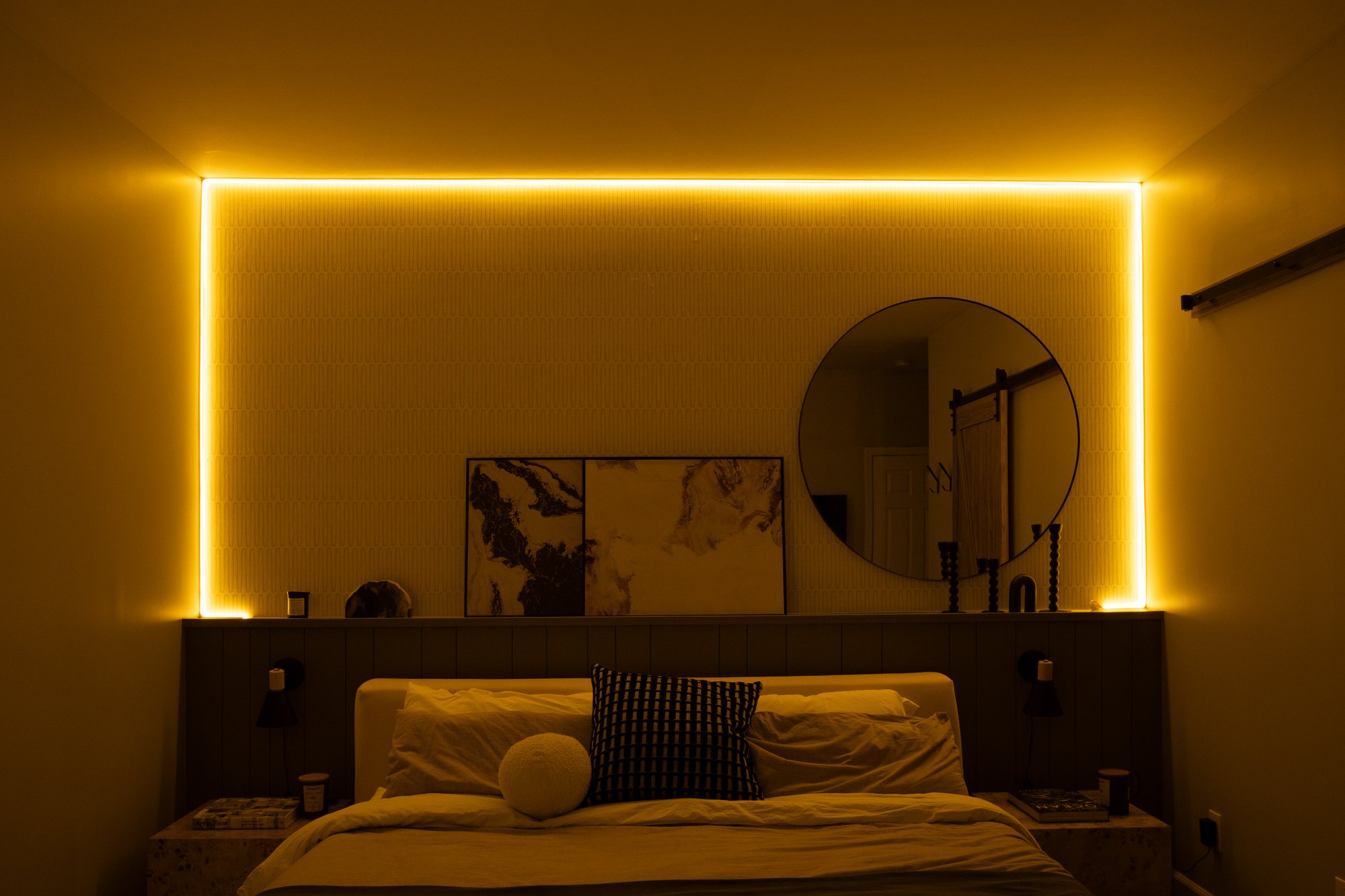
The science
Your body runs on light.
Light, not willpower, sets the internal clock that governs your energy, your mood, and your sleep. SunrAIse gives that signal back, on your schedule.
50+ yrs
of peer-reviewed circadian research it is built on
4
landmark studies behind the approach
25%
higher sleep score in our two-week alpha
50%
faster to fall asleep
What light does to your body.
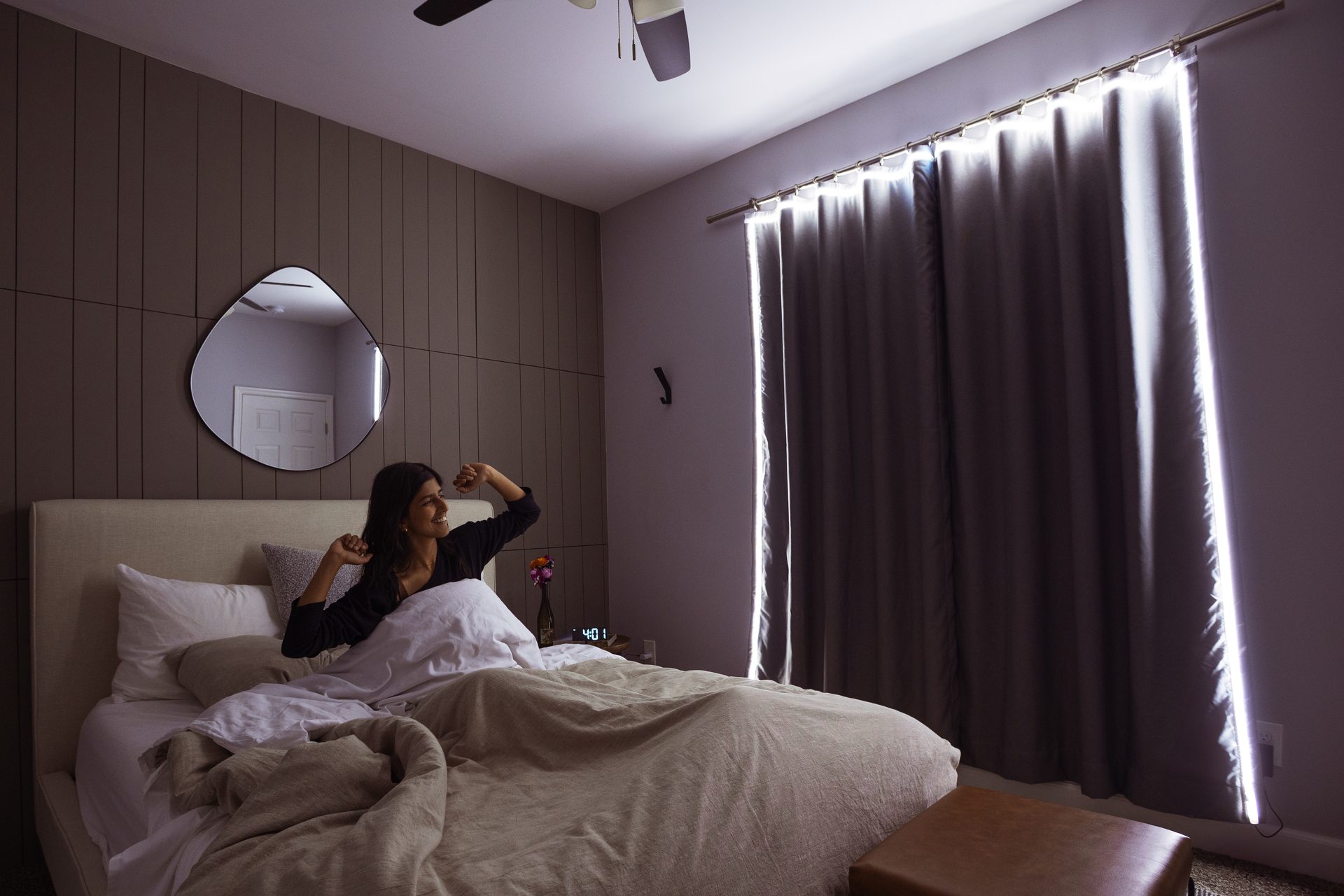
A sunrise wakes you.
A gradual dawn lifts the cortisol your body uses to wake, so you come up alert instead of startled, with less of the grogginess a sudden alarm leaves behind.
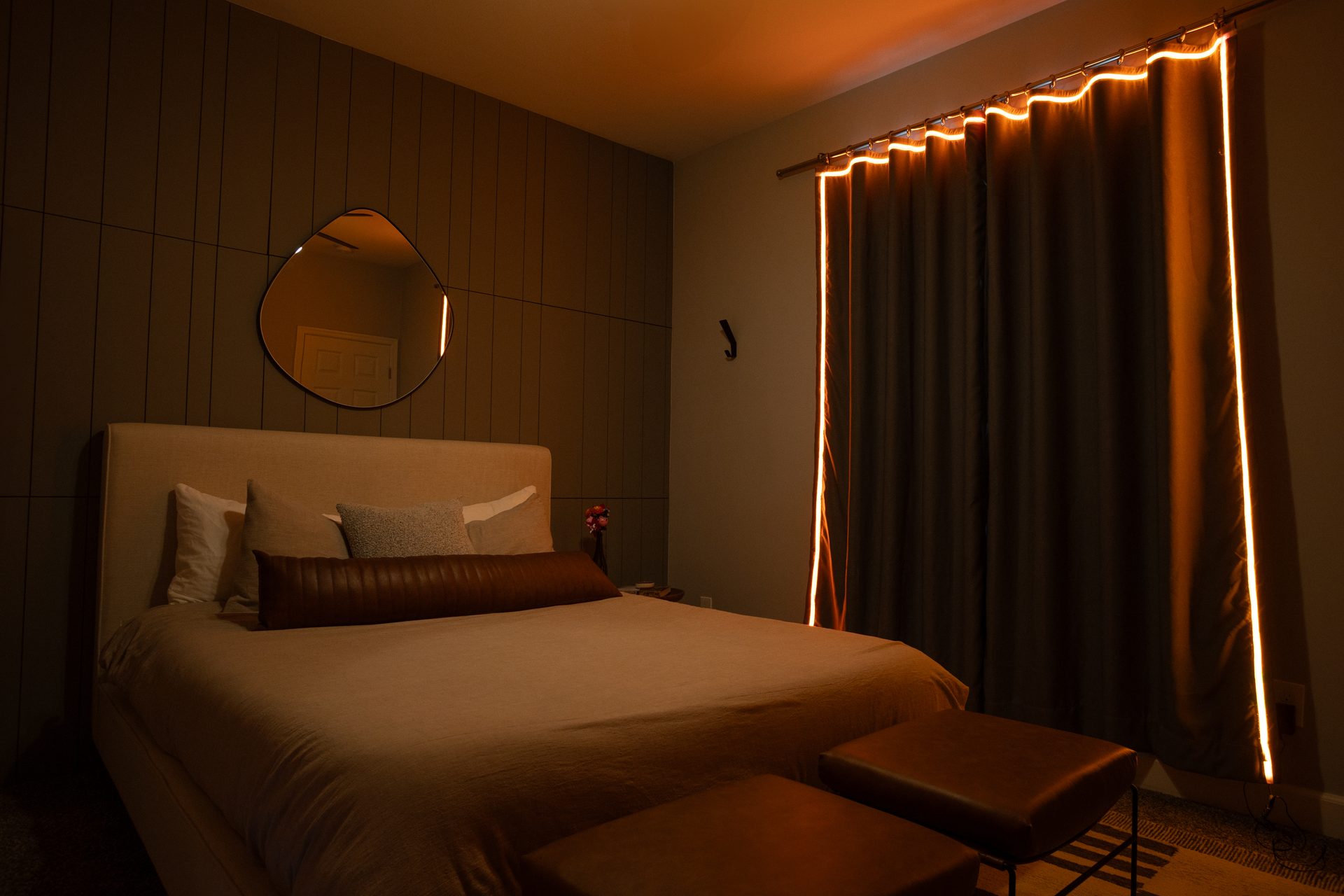
Light sets your clock.
Your circadian rhythm is governed by light, not willpower. Bright morning light advances that internal clock, pulling your whole system earlier, on whatever schedule your life demands.

Darkness protects your sleep.
Even a sliver of light suppresses melatonin and fragments sleep. 100% blackout holds your room at midnight until your sunrise begins, whether that is 6 AM or 6 PM.
The numbers behind it.
+12.8%
stronger cortisol wake-up response from a gradual dawn
Thorn et al., 2004
1 day
to start shifting your body clock with morning light
Crowley and Eastman, 2015
90 min
of melatonin lost to ordinary room light at night
Gooley et al., 2011
23%
higher heart-attack risk from a disrupted clock
Vyas et al., 2012
Two-week alpha test
25%
higher sleep score, and asleep 50% faster.
In just two weeks, our alpha testers, including night-shift nurses, reported markedly better sleep and fell asleep in half the time.
“I could consistently fall asleep and wake up effortlessly, an extra hour or two of sleep a night instead of tossing and turning.”
Grounded in research
Built on decades of peer-reviewed circadian science.
The effect of dawn simulation on the cortisol response to awakening in healthy participants
Thorn, Hucklebridge, Esgate, Evans and Clow
Psychoneuroendocrinology, 2004
Phase advancing human circadian rhythms with morning bright light, afternoon melatonin, and gradually shifted sleep
Crowley and Eastman
Sleep Medicine, 2015
Exposure to room light before bedtime suppresses melatonin onset and shortens melatonin duration in humans
Gooley et al.
J. Clin. Endocrinol. Metab., 2011
Shift work and vascular events: systematic review and meta-analysis
Vyas et al.
BMJ, 2012
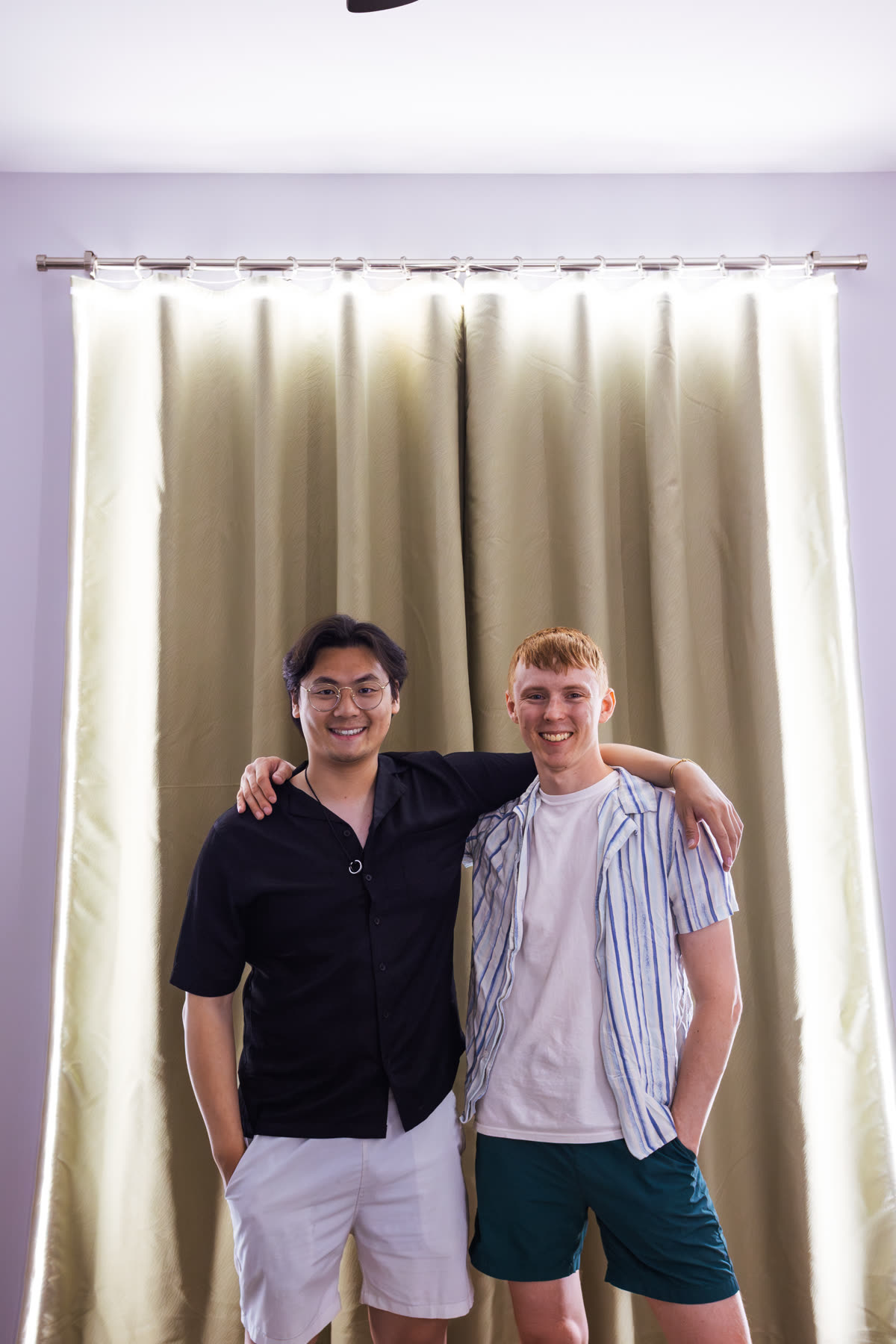
Why we built it
Five years of night shifts, and a body that never adjusted.
Ethereal's founder spent five years working nights, fighting a clock that would not move. SunrAIse is the tool he wished he had: the right light, at the right time, on whatever schedule your life demands.
Your body already knows how to sleep. Let it.
Reserve your spot on the waitlist for early-bird pricing.